Here’s How COVID-19 Compares to Past Outbreaks


What Is Usher Syndrome? - University Of Nevada, Reno
What is Usher Syndrome?Usher syndrome is a genetic disorder involving the loss of both sight and hearing. The hearing loss generally occurs at birth or shortly thereafter; while a progressive loss of vision due to retinitis pigmentosa (a degeneration of the retina of the eyes) begins later in life, usually before adolescence. AT first, the vision loss may be gradual and barely noticeable, but in almost all cases the result is legal blindness.
There are currently three identifiable types of Usher syndrome: Usher syndrome Type 1, Usher syndrome Type II and Usher syndrome Type III. An individual with Usher Type I has a profound hearing loss at birth, experiences balance problems due to vestibular loss, and experiences vision loss usually in early childhood. In Usher Type II, an individual has a sloping audiogram going from a moderate loss in the low frequencies to profound impairments in the higher frequencies, has no balance problems, and usually begins to lose his/her vision in the midteens. A person with Usher syndrome Type III starts with normal or near-normal hearing that progressively deteriorates, might have some balance disturbance, and experiences vision loss by midteens.
Usher syndrome occurs in approximately 1 in 25,000 and the incidence is estimated to possibly be as high as 1 in 10,000 individuals. This range is due to the difficulty in identifying persons with Usher syndrome, particularly persons with Type II Usher. Of persons with Usher syndrome, approximately 90% will have Type I Usher, with Type II accounting for almost 10%. At this time, Usher syndrome Type III appears to occur primarily in Finland.
While only approximately 4 in 100,000 people are diagnosed with Usher syndrome, it is estimated that 3 to 6 percent of people who have a hereditary hearing loss have the syndrome. An equal percentage of children who are hard of hearing my also have Usher syndrome.
Why is Early Identification Crucial?Due to accessibility concerns, if you would like screening forms for Usher's Syndrome, please contact MaryAnn Demchak through email. We can provide the following forms:
The first noticeable symptom of Usher syndrome is a sensorineural hearing loss. If the hearing loss is a result of any of the conditions listed below, the person is at low risk for Usher syndrome. There is always a small chance that Usher syndrome is a secondary cause of the hearing loss, but this is extremely rare.
While the individuals who have a hearing loss due to any of the conditions listed below are at low risk for Usher syndrome, they may suffer a vision loss for other reasons. This makes it especially important to have regular, comprehensive eye exams.
Low Risk Causes:*The genes for deafness and for Usher syndrome are different. An individual at risk for Usher syndrome will probably not have another family member who is deaf, unless they too have Usher syndrome.
What are Symptoms the Individual May Notice?Individuals with Usher syndrome may not notice the subtle changes associated with gradual visual loss. Questions such as those listed below may help the person with Usher syndrome, the family, teacher, or school nurse acquire the information needed for a basic screening.
Ask the Individual:The Usher syndrome web pages were adapted from brochures previously developed by the Indiana Deaf-Blind Services Project, the Alaska Usher Syndrome Screening Project, and Oregon's Usher Syndrome Project.
Additional information was taken from the following articles and resources:
Usher Syndrome: What Are The Symptoms? - News-Medical.net
IntroductionUsher Syndrome Symptoms: Type 1Usher Syndrome Symptoms: Type 2Usher Syndrome Symptoms: Type 3Usher Syndrome Symptom ManagementReferences
Usher syndrome is characterized by loss of hearing and vision and problems relating to balance and movement. There are three types of the syndrome, according to when the symptoms present and the severity of the symptoms.
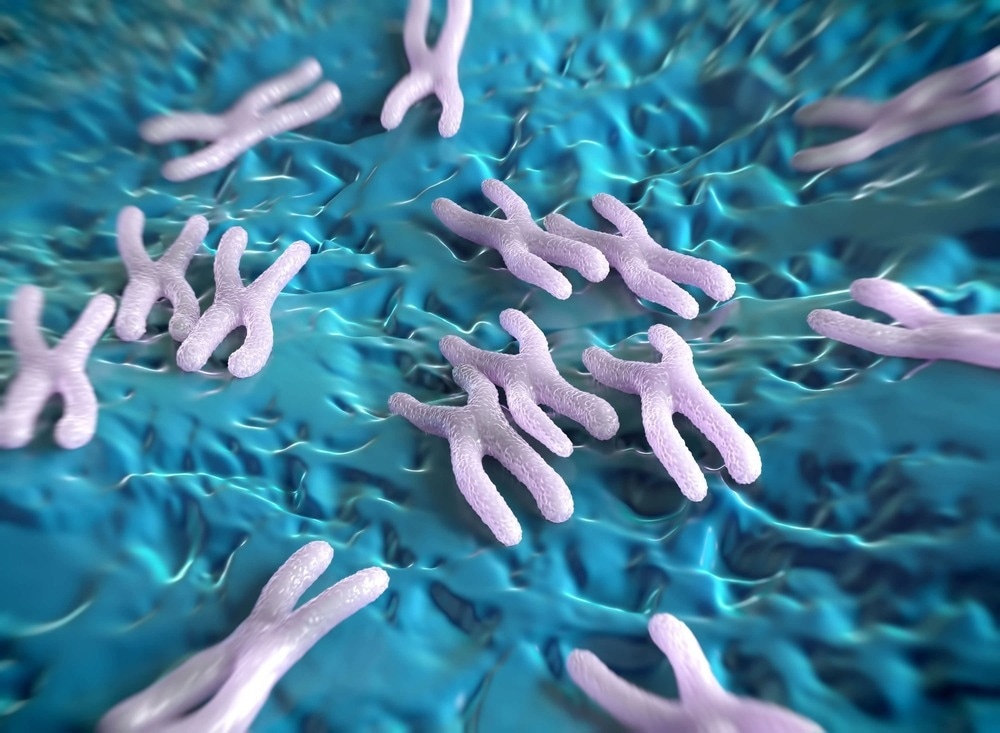
Image Credit: Peddalanka Ramesh Babu/Shutterstock.Com
Usher Syndrome Symptoms: Type 1People with type 1 Usher syndrome are born with significant symptoms that inhibit their function and learning from infancy.
They are almost completely deaf at birth and have stark balance problems that affect their mobility. They usually learn to sit without the need for support at a later age, commonly older than one year old. Likewise, the first steps and walking are often delayed to approximately two years old.
Loss of vision tends to present in early childhood and uniformly before the age of 10 years old. The initial signs are problems seeing in the nighttime and peripheral vision, which soon progresses to total blindness.
Usher Syndrome Symptoms: Type 2Type 2 Usher syndrome also displays signs from birth, although the severity of the symptoms is usually not as profound as those affected by type 1.
Hearing loss may be moderate to severe at birth, but the ability to maintain balance is usually normal. Abnormalities in vision begin to develop in teen years but typically progress more slowly than in individuals with type 1, so most individuals do not entirely lose sight.
Usher Syndrome Symptoms: Type 3A baby with type 3 Usher syndrome does not usually exhibit major signs of the condition at birth. They have relatively normal hearing, vision, and balance abilities, such that the condition may not be recognized until a later date.
Over time, there is a gradual loss of vision and hearing, but the rate at which this occurs differs considerably between different children. However, a loss of hearing is usually evident when the child reaches their teen years and night vision also begins to present as an issue.
The decline in hearing and vision ability continues in life, and most individuals are clinically blind when they reach middle age. Problems in balance may also arise, varying greatly in severity for each individual.
Usher Syndrome Symptom ManagementIt is important that babies with Usher syndrome are identified and diagnosed as soon as possible to enable them to begin learning techniques that will help them to cope with the changes associated with the loss of senses.
Children with type 1 Usher syndrome are almost completely deaf at birth and, with currently available medical treatments, will never regain their hearing ability. As such, it is beneficial for them and their families to learn sign language to help them communicate.
While hearing aids do not benefit individuals with type 1, as they are completely deaf, children with type 2 or type 3 can significantly improve their quality of life with a hearing aid. This is because they have not completely lost their sense of sound, so the amplifying effect of hearing aids can help.
Specialist health professionals trained in the learning development of children with Usher syndrome can aid in support of parents and children affected by the syndrome. It can be a steep learning curve for everyone involved, and adequate support must be given as symptoms develop or become more severe over time.
References:Usher Syndrome Types, Symptoms, Causes, Treatments & Tests (2022). Available at: https://my.Clevelandclinic.Org/health/diseases/15046-usher-syndrome (Accessed: 4 August 2022).
Rull, D. (2010) Usher's Syndrome. Congenital deafness and usher's syndrome, Patient.Info. Available at: https://patient.Info/doctor/Usher-Syndrome.Htm (Accessed: 4 August 2022).
Usher syndrome - Better Health Channel (2022). Available at: https://www.Betterhealth.Vic.Gov.Au/health/conditionsandtreatments/usher-syndrome (Accessed: 4 August 2022).
She Hoped Key Research Could Help Save Her Eyesight. Then The Trump Funding Cuts Came
Jessica Chaikof and her older sister, Rachel, were both born deaf. At the time, the family didn't know exactly why. The girls began using cochlear implants and carried on.
"And so we pretty much lived our lives normally," Chaikof says.
But in 2006, when Chaikof was 11 years old, her older sister started having vision problems and was diagnosed with Usher syndrome Type 1F. It's a rare genetic disorder that causes deafness at birth, and then, over time, blindness.
"My mom didn't want to scare me, but they knew if Rachel had it, I have to have it too because it's genetic," she recalls.
Chaikof's now 30 years old, and a Ph.D. Student at Brandeis University in the social policy program, where she focuses on disability and higher education policy. And she gets around, especially at night, with the help of a guide dog — a yellow Lab named Jigg.
Chaikof is hoping research into gene therapies could someday stop or even reverse the deterioration of her vision. But she worries that cuts to federal research funding — especially at Harvard — could mean that therapy won't be ready in time to save her sight.
"I don't want to go blind," Chaikof says. "And so that progression is really scary, especially when I see the cuts by the Trump administration on research funding."
A federal judge's ruling this week that funding should be restored for about 800 terminated NIH grants does not include the widespread cancellation of grants at Harvard University. This means that more than a billion dollars from the National Institutes of Health and National Science Foundation that were awarded to Harvard but have not yet been spent are now unavailable.
The Trump administration has said the termination of Harvard's grants are in part because of what it sees as the university's failure to address antisemitism on campus. Usher 1F, which is thought to affect somewhere around 10 to 20 infants born in the U.S. Each year, is particularly prevalent in people descended from Ashkenazi Jewish populations.
"I get really angry because the Trump administration claims they're protecting us. They're not," says Chaikof. "They're actively harming us. Especially when you're attacking funds for Ashkenazi Jews, Jewish diseases."
Chaikof's parents run a foundation called the Usher 1F Collaborative, which is dedicated to supporting the development of gene therapies for Usher 1F. In 2017, Dr. David Corey, a Harvard scientist who'd been studying the protein that's affected in these patients, met Jessica and her sister at a conference hosted by the foundation.
"And it was really meeting the two daughters and seeing how well they're bearing up with the challenges of the disease that we said, 'You know, we might be able to contribute something here. If we don't, who else is going to do it?'" Corey says.
They now have a good understanding of the protein that's defective in patients with Usher 1F, Corey says.
"Because we know so much about it, we could design strategies to deliver a normal copy of this protein, first to the inner ear and then to the retina," he says.
It's going to take more research before they're ready to begin human trials of a gene therapy that could fix that protein in patients, Corey says.
There are no existing grants to Harvard pertaining specifically to Usher 1F — and so the cancellations haven't yet directly impacted the research — but Corey says he has two grant applications submitted to the National Institutes of Health — and he's not optimistic about their approval.
"But even if they are scored very highly by a review committee, it's unlikely that those grants would ever be awarded to Harvard," he says. "That will really slow down the research."
Already, some of his research has come to a halt. Corey had an NIH grant terminated that was supporting basic science into the genetic mechanism of hearing.
The NIH did not respond to a request for comment.
"To be at the verge of developing therapies finally for some diseases that we could only diagnose for decades and then to have the rug pulled out from under us — for the whole scientific enterprise, not just Harvard — is really discouraging," Corey says.
Even so, Corey said he's optimistic Harvard's lawsuit challenging the federal funding freeze will be successful. He says when that happens, his grant applications will be there, ready for funding.
Jessica Chaikoff is hoping he's right. She's confident gene therapies could work.
"And that's the case, not just for my disease, but for any rare disease," Chaikof says.
As long, she says, as the federal funding is available.
Copyright 2025 NPR


Comments
Post a Comment