Think you have the flu? Watch out for these mild and emergency symptoms in 2025


Ebola Virus History
Ebola virus, together with the Marburg virus, belongs to the family Filoviridae.
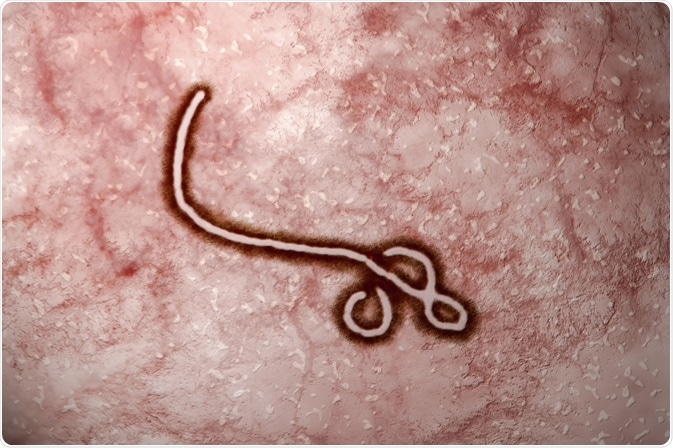
Image Credit: Nixx Photography / Shutterstock.Com
The discovery of the Marburg virusThe medical scientific community first encountered this viral family when the Marburg virus appeared in 1967. During that time, laboratory workers with an unusual and severe disease were admitted to a hospital in Marburg, Germany. Subsequent investigation found that the immediate sources of the virus were green monkeys imported from Africa that were used for vaccine research.
Those monkeys were also shipped to Frankfurt in Germany and Belgrade in former Yugoslavia. They were immediately euthanatized, and the epidemic was contained, though a total of 31 human cases and one generation of secondary transmission to health care workers and their family members occurred. Nevertheless, high human mortality, unusual morphology of the virus, and the failure to identify its natural history left many in fear and deeply concerned about potential future threats.
The emergence of the Ebola virus in AfricaHumanity did not have to wait long for another threat to emerge. The Ebola virus, which is the second member of the filovirus family, was first discovered in 1976 when two outbreaks of hemorrhagic fever occurred in two neighboring locations. The first arose in southern Sudan and the other one in northern Zaire, which later came to be known as the Democratic Republic of the Congo.
The outbreak in Zaire infected 318 people with an extremely high mortality rate of 88%, while the outbreak in Sudan infected 284 people with a mortality rate of 53%. Medical centers were closed because of the high death toll among the healthcare staff, thus eliminating dissemination of infection through the use of unsterilized syringes and needles. The situation outside the clinics was controlled through the segregation of patients in the affected villages by proven methods of quarantine.
In 1979, another Ebola epidemic occurred in Nzara, which is located in the south of Sudan. The reported number of human cases during this epidemic was 34, although the mortality rate climbed to 65%.
After that, the Ebola virus had not been seen again until 1994, when in the period of just three years five independent active sites of viral transmission were recognized. Those were Côte d'Ivoire in 1994, the Democratic Republic of Congo in 1995, and Gabon in 1994, 1995, and 1996.
Alongside two previously known species Zaire ebolavirus and Sudan ebolavirus, a third distinct species was discovered during that period in Africa which was named the Côte d'Ivoire ebolavirus and is now referred to as the Taï Forest ebolavirus. A source of the virus was an infected ethnologist who performed a necropsy on a chimpanzee while working in the Tai Forest reserve in Côte d'Ivoire.
Ebola virus in the United StatesIn 1989, Ebola appeared in monkeys imported into a primate facility in Reston, Virginia, outside of Washington DC. Epidemics in cynomolgus monkeys imported from the Philippines occurred in this and other facilities, namely in Texas, through 1992, and recurred in 1996. Fortunately, no deaths among infected individuals were reported.
Epidemiologic studies conducted in connection with these incidents successfully traced the virus to one Philippine exporter but were not able to detect the actual source of the virus. Political instability at that time hampered the attempts to work in the remote areas where the monkeys were captured. Today, this virus species is known as Reston ebolavirus and does not represent a threat to humans, although it is very hazardous to primates.
The Story of EbolaPlay
The continuing threat for Africa in the 21st centuryAnother large outbreak occurred in the Masindi, Mbarara, and Gulu districts of Uganda at the turn of the century (2000-2001), infecting 425 people and carrying a mortality rate of 53%. The most important risks associated with this outbreak were attending the funerals of Ebola hemorrhagic fever patients, providing medical care to Ebola patients without using adequate personal protective measures, and having contact with family members of the diseased.
Ebola hemorrhagic fever remained a plague for the population of Africa during the 21st century. Almost all human cases during that period resulted due to the emergence or re-emergence of the Sudan ebolavirus in Sudan and Uganda, as well as the Zaire ebolavirus in regions of Gabon, Republic of the Congo, and the Democratic Republic of Congo.
The most recent Ebola outbreak across Guinea, Nigeria, northern Liberia, and eastern Sierra Leone started in March 2014 and is considered to be the largest one yet, often dubbed "the worst in history." The epidemic formally ended on March 29, 2016, when the World Health Organization (WHO) lifted the Public Health Emergency of International Concern (PHEIC) status in these areas. By the end of this epidemic, a total of 28,616 cases of the ebola virus disease and 11,310 deaths were reported in the African nations, with an additional 36 cases and 15 deaths that occurred in countries outside of Africa.
ReferencesEbola Kills Nurse In Uganda's Capital Kampala, First Death From Virus Since Last Outbreak Ended In 2023
Kampala, Uganda — A nurse in the Ugandan capital, Kampala, has died of Ebola, a health official said Thursday, in the first recorded fatality since the last outbreak ended in 2023. Diana Atwine, permanent secretary of the health ministry, told reporters the 32-year-old male patient was an employee of Mulago Hospital, the main referral facility in Kampala.
After developing a fever, the patient was treated at several locations in Uganda before multiple lab tests confirmed he had been suffering from Ebola. The patient died on Wednesday, and Ebola was confirmed following postmortem tests, Atwine said.
Health authorities were "in full control of the situation," she said.
Ebola, which is spread by contact with bodily fluids of an infected person or contaminated materials, manifests as a deadly hemorrhagic fever. Symptoms include fever, vomiting, diarrhea, muscle pain and at times internal and external bleeding.
CBS News goes inside Ebola treatment center in Congo 02:12 At least 44 contacts of the patient have been listed, including 30 health workers and patients at the hospital in Kampala, according to Uganda's Ministry of Health. Scientists don't know the natural reservoir of Ebola, but they suspect the first person infected in an outbreak acquired the virus through contact with an infected animal or eating its raw meat. Ugandan officials are still investigating the source of the current outbreak. Uganda has had multiple Ebola outbreaks, including one in 2000 that killed hundreds. A 2014-16 Ebola outbreak in West Africa killed more than 11,000 people, the disease's largest death toll. Ebola was discovered in 1976 amid two simultaneous outbreaks in South Sudan and Congo, where it occurred in a village near the Ebola River, after which the disease is named. More from CBS News Suspect in Liverpool car ramming identified and charged by police
  Andrew Tate and brother Tristan face rape, trafficking charges in U.K.
  19-year-old's death draws warnings over viral "RUNIT" sports trend
  2-ton seal takes "unexpected journey" into residential area
  Explosion kills Russian veteran who led airstrikes on Ukraine port city
 Ebola Outbreaks: Why They Happen And How To Stop Them
Jane Yoon Scott, MD, is an infectious disease physician and an assistant professor of medicine at Emory University in Atlanta. Dr. Scott enjoys connecting with her patients, empowering them to understand and take ownership of their health, and encouraging them to ask questions so that they can make informed and thoughtful decisions.
She graduated with the highest honors from the Georgia Institute of Technology, then received her MD from the Medical College of Georgia. She completed her internal medicine residency training and chief residency at Temple University Hospital, as well as a fellowship in infectious diseases at Emory University. She is board-certified in both internal medicine and infectious diseases.
When she is not seeing patients, Dr. Scott works with neighboring health departments to promote public health, especially to communities that have been historically underserved. She also teaches medical trainees and lectures medical students at the Emory University School of Medicine.
In her free time, Dr. Scott appreciates a good coffee shop, weekend hikes, playing guitar, strolling through cities, sampling restaurants, and traveling to new places.


Comments
Post a Comment